
Local Fulfillment in Mexico for Global Brands

Mexico has become an important growth market for international retailers, manufacturers, and digital-first brands. The Mexican Association of Online Sales reports that online retail reached MXN 941 billion and 77.2 million digital buyers. For companies serving that demand from abroad, market access is only part of the equation. The fulfillment model must also support inventory availability, domestic delivery, returns, and customer communication.
Local fulfillment in Mexico gives global brands an alternative to shipping every order from another country. This form of local order fulfillment in Mexico does not require opening a warehouse independently. A company can place inventory with a local third-party logistics provider that receives products, stores them, processes orders, coordinates domestic shipping, handles returns, and shares inventory data. Its suitability depends on order volume, product requirements, import structure, inventory turnover, and expected growth.
Why Global Brands Are Moving Fulfillment Closer to Mexican Customers
Mexico and the United States already have deeply integrated supply chains. In 2024, Mexico was the second-largest destination for U.S. exports and the leading source of U.S. imports, according to the Office of the United States Trade Representative (n.d.). Consumer fulfillment, however, requires more than moving bulk inventory across a border.
When orders ship individually from a foreign warehouse, every purchase follows a longer international route. Local fulfillment in Mexico changes that sequence: inventory is imported in planned quantities, positioned closer to demand, and released as domestic orders arrive. The brand retains control of merchandising and customer relationships while the local operation manages physical execution.
INEGI estimated the gross value added of eCommerce at MXN 2.308 trillion in 2024, with retail commerce representing 29.1% of that measure (Instituto Nacional de Estadística y Geografía [INEGI], 2026). For global brands, the practical implication is clear: logistics must be designed for a market with substantial online purchasing activity.
Cross-Border Shipping vs. Local Fulfillment in Mexico
Cross-border shipping may suit an early market test, especially when order volume is limited or products are specialized. Once demand becomes predictable, holding inventory locally may offer greater control over fulfillment and post-purchase service.
|
Operational factor |
Cross-border order shipping |
Local inventory fulfillment |
|
Inventory location |
Outside Mexico |
Inside Mexico after importation |
|
Delivery distance |
International route per order |
Primarily domestic route |
|
Returns |
May require international handling |
Can be received locally |
|
Inventory visibility |
Spread across several systems |
Centralized warehouse data |
|
Scalability |
Tied to border-processing capacity |
Based on storage and processing capacity |
|
Customer experience |
More international handoffs |
More consistent domestic workflow |
|
Operational control |
Reliance on external handoffs |
Defined local processes and service levels |
The comparison should include customs coordination, return costs, stock exposure, customer expectations, and internal workload. Local fulfillment in Mexico works best when it simplifies the entire order lifecycle, not merely the warehouse address.
How Local Fulfillment in Mexico Works
A global company forecasts demand, chooses which products to position in Mexico, and coordinates compliant importation with qualified advisors. The 3PL then records each SKU, verifies quantities, assigns storage locations, and connects available stock to the brand’s sales channels.
Broader Mexican fulfillment solutions may include receiving, warehousing, inventory control, packing, distribution, kitting, and reverse logistics. Responsibilities should be documented before launch.
Inventory Receiving and Storage
The provider should compare incoming products against expected quantities, identify visible damage, and update inventory according to agreed rules. Companies assessing a fulfillment center Mexico operation should ask how discrepancies, quarantined goods, cycle counts, and adjustments are recorded.
Order Processing, Picking, and Packing
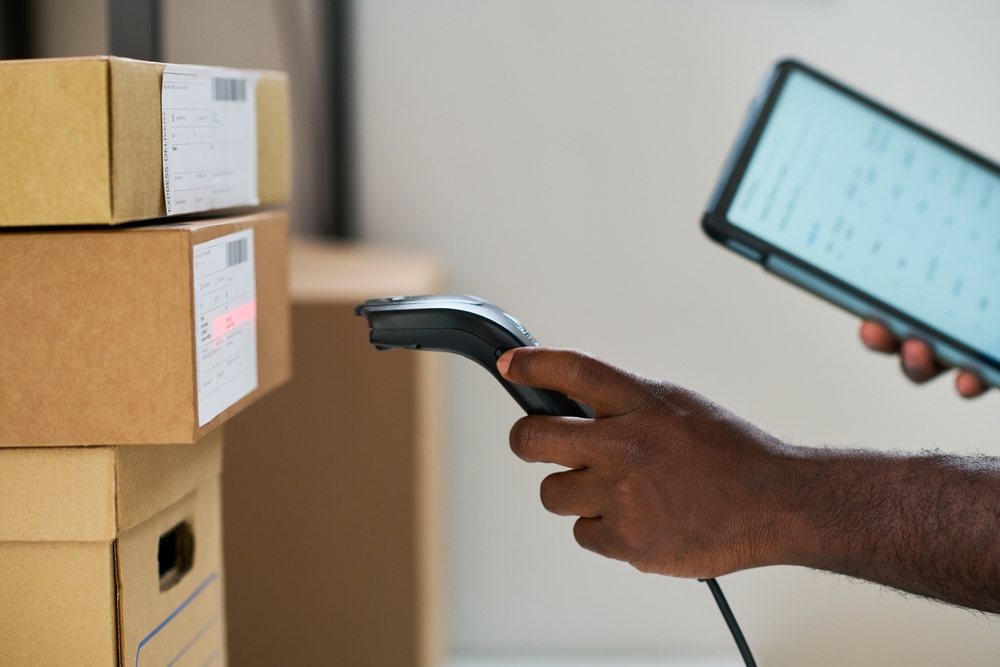
Orders should pass from the sales platform or ERP to the warehouse management system. The warehouse allocates stock, generates picking instructions, verifies items, and packs them according to brand and carrier requirements.
Domestic Shipping and Last-Mile Delivery
After packing, the provider creates shipping documentation and transfers the parcel to the selected carrier. For last-mile delivery in Mexico, a capable Mexico fulfillment partner should help define carrier rules by destination, package profile, service level, and order value rather than promise one universal delivery time.
Returns and Reverse Logistics
A local return address gives the brand a structured way to inspect, restock, refurbish, quarantine, or dispose of returned products. Rules should specify acceptable conditions, refund triggers, inventory status, and reporting responsibilities.
Benefits of Local Fulfillment for International Brands
The main benefit of local fulfillment in Mexico is operational proximity. Inventory stored near the market passes through fewer international handoffs after purchase, making delivery issues and returns easier to manage through a domestic workflow.
Local stock also supports planning by SKU, region, channel, and season. Better visibility can guide replenishment and reduce the risk of sending too much of a slow-moving item or too little of a fast seller.
A 3PL in Mexico can also provide labor, storage, packing stations, carrier relationships, and systems without requiring the brand to build each capability internally. The company still remains responsible for forecasts, commercial decisions, compliance, and supplier coordination.
Technology and Inventory Visibility
Reliable inventory management in Mexico requires international teams to oversee operations without being physically present in the warehouse. The fulfillment platform should exchange orders, inventory balances, shipment status, cancellations, and returns with the brand’s eCommerce system or ERP.
Teams should confirm update frequency, SKU mapping, routing rules, data ownership, permissions, alerts, reporting, and outage procedures. The World Bank’s redesigned Logistics Performance Indicators focus on observed connectivity, speed, reliability, and unpredictability around border procedures and inland checkpoints (World Bank, 2025). Accurate system data helps a brand identify and manage those exceptions.
Challenges to Evaluate Before Moving Inventory to Mexico
Local fulfillment in Mexico requires decisions about product selection, safety stock, replenishment frequency, and aging inventory. Weak forecasts can create excess storage or stockouts even when the warehouse performs well.
Import, customs, tax, labeling, and product requirements vary according to the goods, transaction structure, and circumstances of each company. Qualified legal, customs, and tax professionals should review those matters.
The logistics agreement should also cover peak-season capacity, restricted products, packaging standards, order cutoffs, inventory discrepancies, returns, claims, reporting, and service-level remedies. Integrations and operating scenarios should be tested before full volume is transferred.
How to Select a Mexico Fulfillment Partner
A provider should be evaluated against the brand’s real operating profile. Ask:
-
Does it support international brands and bilingual teams?
-
Where is the warehouse, and what regions does it serve?
-
Which eCommerce, ERP, marketplace, and carrier integrations are available?
-
How are receiving, picking, damaged goods, and returns controlled?
-
What reports show inventory, orders, exceptions, and performance?
-
Can capacity expand during launches and seasonal peaks?
-
Are all fees and contractual service levels transparent?
A brand seeking fulfillment Mexico services should request a process walkthrough using its SKU count, order profile, package dimensions, returns, and sales channels. A strong proposal converts those inputs into a clear operating design.

Build a Local Fulfillment Strategy with Búho Logistics
Local fulfillment in Mexico can create a more controlled path from inventory arrival to customer delivery. The right model depends on demand, product characteristics, integrations, distribution coverage, and expansion plans.
At Búho Logistics we support order fulfillment for international brands through warehousing, inventory management, order preparation, shipping coordination, and returns in Mexico. Contact our team to discuss your SKUs, monthly volume, sales platforms, packaging needs, distribution requirements, and growth expectations. Together, we can evaluate whether a local fulfillment structure fits your strategy and define the steps required to launch it responsibly.