
Wholesale Order Fulfillment in Mexico
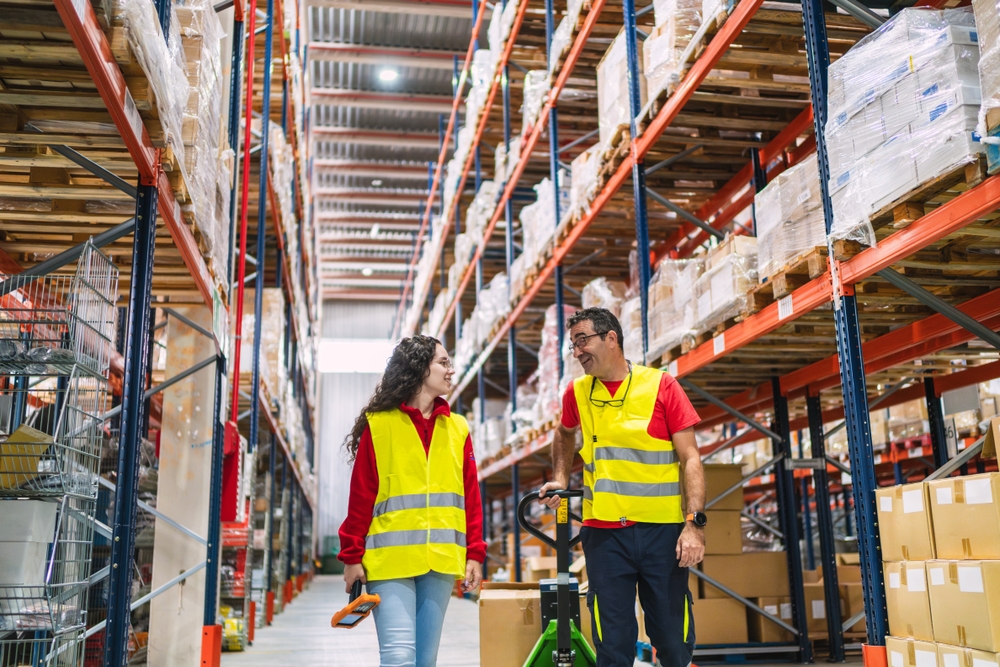
Wholesale growth often creates a logistics problem before a sales problem. A company may be ready to supply retailers or distributors, yet its warehouse may not be prepared for large orders with strict labeling and delivery requirements. Wholesale order fulfillment in Mexico provides the necessary structure without forcing the business to build every capability internally.
For Mexican and international companies, the right operation connects storage, inventory visibility, order preparation, and transportation. It must handle cartons, pallets, or store replenishment orders while maintaining accuracy and traceability. Fulfillment is therefore not simply a warehouse service, but the coordinated execution of every step from receipt to confirmed delivery.
What Is Wholesale Order Fulfillment?
Wholesale order fulfillment is the process of preparing and distributing merchandise in larger quantities to another business rather than directly to an individual consumer. The recipients may be retailers, distributors, franchise locations, corporate customers, marketplace warehouses, or a brand’s own stores.
In a typical wholesale order fulfillment in Mexico operation, products are verified against inbound documentation, recorded in an inventory system, and stored according to their handling requirements. Once a purchase order is released, the required units, cases, or pallets are picked, checked, labeled, and dispatched according to the buyer’s instructions.
Companies exploring Mexican fulfillment solutions should look beyond storage space. The provider must understand B2B documentation, case quantities, pallet configuration, appointments, and channel-specific rules.
Wholesale Fulfillment vs. Ecommerce Fulfillment
Both models rely on inventory management, picking and packing, shipping, and traceability, but the execution is different. Ecommerce fulfillment usually involves a high number of small orders sent to individual addresses. Wholesale fulfillment generally handles fewer orders with more units, heavier loads, and more detailed receiving requirements from the business customer.
A direct-to-consumer order may contain one or two products and use parcel delivery. A wholesale order may require cases, pallets, serialized labels, packing lists, or a scheduled delivery. One incorrect B2B shipment can disrupt store replenishment or a promotion.
Businesses that operate both channels need processes that keep them connected without treating them as identical. A provider experienced in fulfillment for ecommerce can support individual orders, while a wholesale workflow manages bulk quantities, B2B specifications, and coordinated freight. The shared inventory must remain accurate across both channels.
Key Processes in Wholesale Order Fulfillment in Mexico
Reliable wholesale order fulfillment in Mexico begins with clearly defined operating rules. Product characteristics, order profiles, customer requirements, and transportation needs determine how the workflow should be designed.
Receiving and Inventory Control
At receiving, the warehouse verifies quantities, condition, SKUs, lots, or serial numbers when applicable. Discrepancies should be identified before stock becomes available for sale.
An experienced fulfillment center in Mexico gives the business visibility into receipts, available stock, committed units, and outbound movements. This is essential when the same inventory supports distributors, retail accounts, and ecommerce orders.
Picking, Packing, Labeling, and Kitting
Picking may take place by unit, inner pack, case, layer, or pallet. The method must reflect the order profile and reduce unnecessary handling. Before packing, teams verify SKUs and quantities, then prepare the merchandise according to the buyer’s routing guide or delivery specifications.
Value-added work can include relabeling, bundles, inserts, multipacks, assembly, and kitting. It adapts inventory for a retailer or campaign without sending it to another facility.
Pallet Preparation, Dispatch, and Transportation
Bulk order fulfillment may require pallet building, stretch wrapping, weight and dimension verification, shipping labels, packing lists, and dispatch documentation. The logistics provider must also select an appropriate transportation mode based on volume, destination, delivery window, and handling needs.
For store replenishment or distribution-center deliveries, domestic freight in Mexico helps connect the warehouse with destinations across the country. Smaller orders may benefit from multi-carrier shipping, while cross-border supply chains may require coordinated international freight.

Wholesale Fulfillment Processes and Business Benefits
|
Process |
What it includes |
Business benefit |
|
Receiving |
Quantity verification, condition checks, SKU identification, and system registration |
Prevents inbound discrepancies from affecting future orders |
|
Warehousing |
Organized storage by product profile, rotation rule, and order frequency |
Improves access to inventory and supports efficient space use |
|
Inventory control |
Stock updates, allocation, cycle counts, and movement history |
Provides reliable availability data across sales channels |
|
Picking and packing |
Selection by unit, case, or pallet, followed by verification and packing |
Reduces preparation errors and supports buyer-specific requirements |
|
Labeling and kitting |
Retail labels, bundles, inserts, multipacks, and promotional assembly |
Adapts products for different customers and campaigns |
|
Pallet preparation |
Pallet configuration, protection, measurements, and documentation |
Helps shipments arrive ready for business receiving processes |
|
Dispatch and distribution |
Carrier coordination, freight selection, tracking, and delivery follow-up |
Creates a more consistent route from warehouse to customer |
Why Mexico Matters for Wholesale and B2B Distribution
Mexico offers a practical base for domestic distribution and regional supply chains. Its manufacturing activity, consumer markets, transport infrastructure, and proximity to the United States make it relevant for brands that need inventory closer to customers in Mexico or North America.
However, location alone does not create an efficient operation. Businesses must understand local delivery conditions, carrier options, documentation, customer requirements, and inventory flows. Working with a provider of B2B fulfillment in Mexico can shorten the learning curve and replace fragmented vendor coordination with a more integrated logistics model.
For an international brand entering the market, a fulfillment distribution center in Mexico can serve as the operational link between inbound merchandise and domestic sales channels. For an established local company, it can provide capacity for growth, seasonal peaks, new accounts, or geographic expansion.
Common Wholesale Fulfillment Challenges
Wholesale operations become difficult when commercial commitments and warehouse capabilities are misaligned. Common problems include inaccurate inventory, incomplete orders, missing labels, unplanned value-added work, and missed delivery appointments.
Demand variability adds complexity. A promotion or new retail account can quickly change storage, labor, and transportation requirements, straining fixed internal capacity during peaks.
Effective wholesale order fulfillment in Mexico addresses these issues through documented workflows, trained personnel, inventory controls, and scalable resources. The goal is to detect problems early, respond consistently, and protect customer relationships.
When Does a 3PL Provider Make Sense?
A company should consider 3PL fulfillment in Mexico when logistics distracts from sales, product development, or expansion. Other signs include limited capacity, poor inventory visibility, frequent preparation errors, difficulty serving several channels, or the need to operate in Mexico without building an internal logistics department.
The provider supplies infrastructure, systems, processes, and logistics personnel, while the client maintains control over commercial strategy and service expectations. This is useful when volume fluctuates or retail customers impose different requirements.
Companies with specialized devices may also need complementary capabilities. For example, fintech logistics can support operations involving terminals or related equipment alongside broader storage and distribution requirements.
What to Look for in a Fulfillment Partner in Mexico
Before selecting a provider for wholesale order fulfillment in Mexico, decision-makers should examine how the operation will work in practice.
Evaluate its B2B experience, warehouse controls, capacity, technology, shipping options, reporting, escalation procedures, and ability to follow routing guides. Ask how inbound differences are reported, inventory adjustments are authorized, and orders are verified.
The provider should explain its pricing and service levels. Storage, receiving, handling, special projects, materials, transportation, and returns may be priced differently. Clear assumptions prevent surprises as the account grows.
Technology, Traceability, and Shipping Flexibility
Technology supports good warehouse discipline. A warehouse management system should record inventory locations and movements, guide order processing, and provide useful operational information. System integrations can reduce manual entry and synchronize stock and orders.
Traceability shows when goods were received, where they were stored, what was picked, and when an order was dispatched. Depending on the product, lot or serial tracking may also be necessary.
Parcel, less-than-truckload, full-truckload, and international movements serve different order profiles. A fulfillment center in Mexico that coordinates several options lets the business choose transportation for each shipment.
Build a Scalable Wholesale Operation with Búho logistics
Búhol ogistics brings fulfillment, inventory control, order preparation, and shipping coordination into one relationship. Its fulfillment Mexico offering supports retailers, ecommerce brands, distributors, wholesalers, and international companies after products enter the warehouse.
For businesses evaluating wholesale order fulfillment in Mexico, the value lies in connecting execution with growth. Accurate inventory supports sales decisions; consistent preparation reduces preventable problems; and multiple shipping options make distribution adaptable.
Choosing a logistics partner is not only about finding space to store products or a carrier to move them. It is about gaining stronger inventory control, fewer operational errors, more efficient distribution, and the capacity to scale without losing visibility.
Contact Búho logistics to discuss your order profiles, sales channels, storage requirements, and shipping needs, and learn how a tailored wholesale order fulfillment in Mexico operation can support your next stage of growth.